Opening day is not the beginning
For a new development, opening day may feel like the moment leasing truly starts. The building is ready. The amenities can be photographed. The model unit can finally welcome visitors.
But prospects begin making decisions much earlier.
They see the first campaign. They search for the property. They compare neighborhoods, layouts, amenities, and pricing. They try to imagine what living there might feel like—even when the physical experience is not yet available.
That means the earliest version of the property experience is often digital.
When that experience is clear and connected, it gives a lease-up momentum before the doors open. When it is fragmented or incomplete, prospects are asked to make a major decision with too little context.
The strongest pre-opening experience does not simply show what is coming. It helps people understand it.
The challenge of leasing what does not exist yet
A finished property gives a leasing team many ways to communicate value. Prospects can walk through a unit, experience the scale of the amenities, understand how spaces connect, and see the surrounding neighborhood for themselves.
Before opening, those physical reference points are missing.
A rendering can communicate atmosphere. A floor plan can explain dimensions. A site map can show location. A list of amenities can describe what will be available.
Individually, each asset is useful. But prospects still have to connect the pieces on their own.
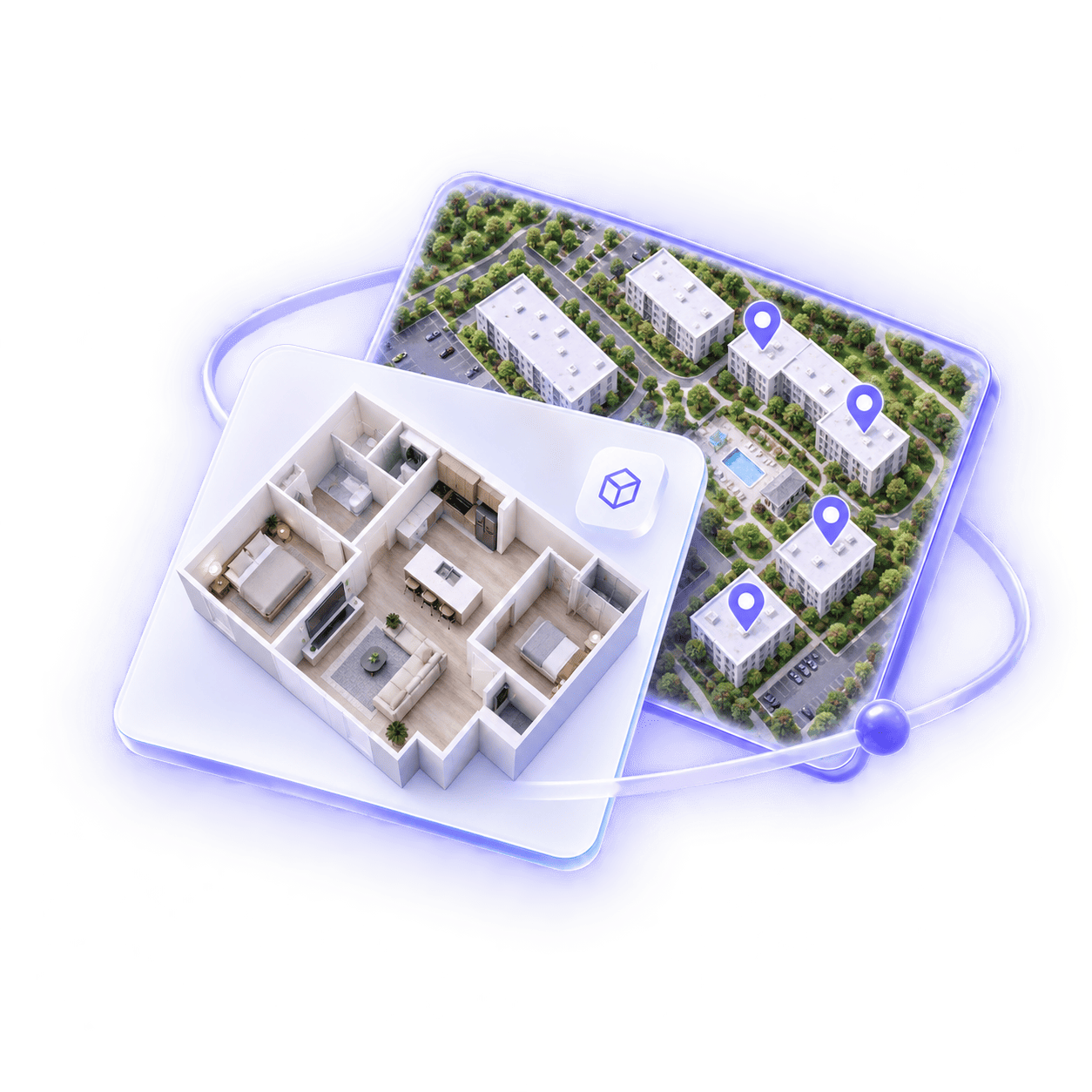
Which building is this residence in? Where is it located within the property? How does the layout relate to the view? How close is it to the pool, lobby, or parking? What does the journey from the entrance to the unit actually feel like?
These are not minor details. They are the questions that turn interest into understanding.
A strong pre-opening leasing experience brings those answers together instead of scattering them across separate pages, PDFs, galleries, and conversations.
Start with understanding, not volume
It can be tempting to treat pre-opening marketing as a race to produce more content: more renderings, more ads, more landing pages, and more campaign variations.
But the volume of content is not the same as the quality of the experience.
The more important question is whether a prospect can build a clear mental picture of the property.
That requires structure.
The property story should move naturally from the broadest level to the most specific:
- Where is the property?
- How is the community organized?
- What spaces and amenities are available?
- Which residences fit the prospect’s needs?
- What does each option look and feel like?
- What should the prospect do next?
When maps, floor plans, residences, amenities, tours, and media follow this logic, the experience becomes easier to navigate—and the property becomes easier to understand.
Build the experience around real decisions
Prospects do not explore a property in a perfectly linear way.
One person may begin with the neighborhood. Another may care most about a particular floor plan. Someone else may immediately look for outdoor space, natural light, a home office, or proximity to an amenity.
A useful digital leasing experience should support those different paths without losing the larger context.
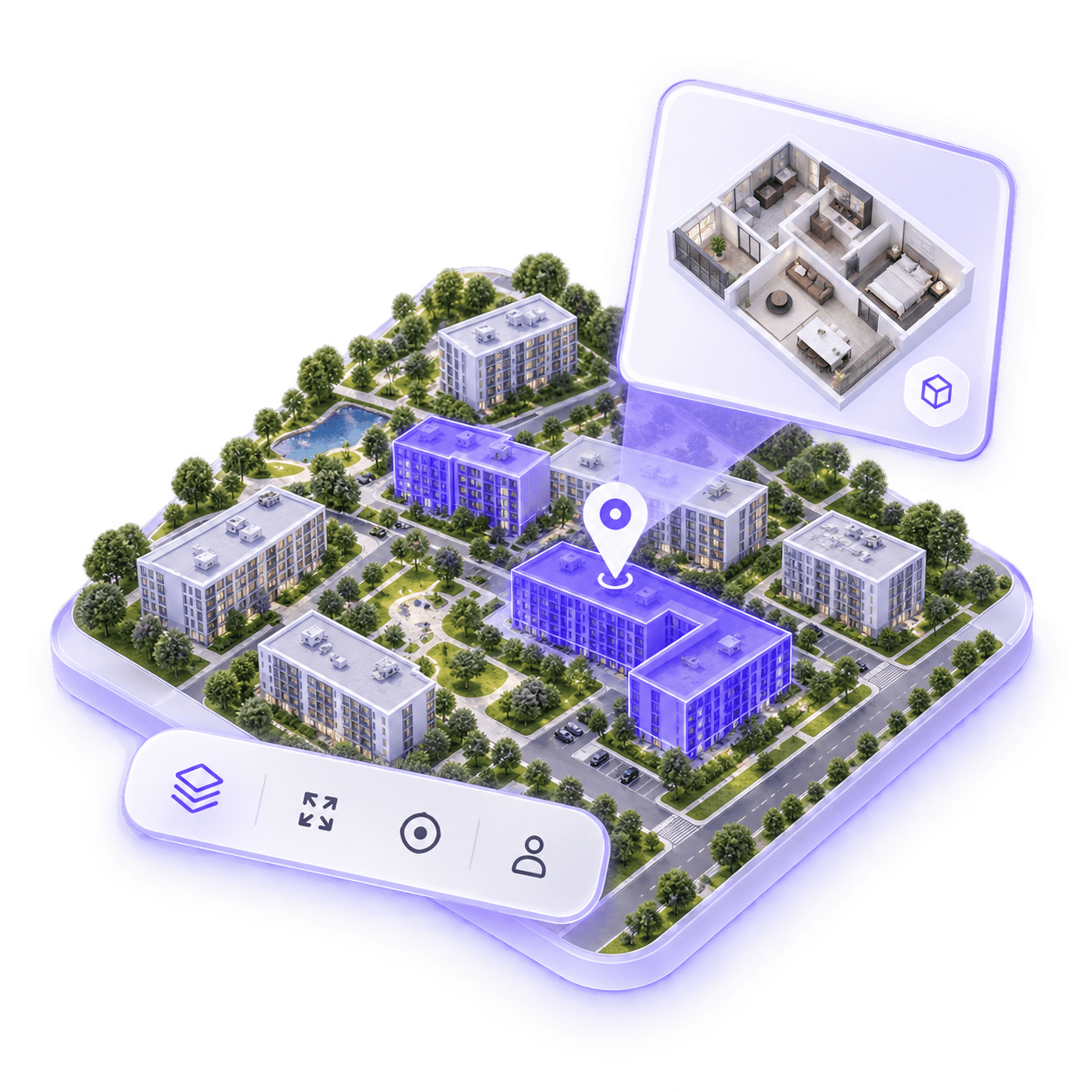
Instead of presenting a fixed sequence of disconnected assets, it should let prospects move naturally between the property, buildings, floors, residences, amenities, and surrounding area.
This is where an interactive platform becomes more valuable than a collection of individual visuals.
Photography Tours and Render Tours remain powerful standalone assets. They show a space with clarity and detail. But within a connected leasing experience, those assets can do more: they become part of the way a prospect explores and understands the entire property.
The goal is not to add interaction for its own sake. The goal is to reduce uncertainty.
Give every asset a role
A strong pre-opening experience does not require every possible piece of content. It requires the right content, organized around a clear purpose.
A map establishes location and context.
A site plan explains the relationship between buildings and shared spaces.
A floor plan helps prospects compare layouts.
Renderings communicate the character of spaces that are still under construction.
Tours provide a sense of movement, scale, and atmosphere.
Unit information helps turn general interest into a specific decision.
When these elements work together, each one answers a different question while supporting the same property story.
Before producing a new asset, ask:
What should the prospect understand or do after seeing this?
If the answer is unclear, the asset may add visual volume without improving the leasing journey.
Create one source of truth
Pre-opening information changes quickly.
Availability is updated. New renderings are approved. Floor plans are revised. Construction reaches new milestones. Amenities gain more detail. Leasing teams learn which questions prospects ask most often.
If property information is distributed across multiple disconnected touchpoints, keeping everything aligned becomes difficult. Prospects may see outdated visuals or inconsistent details, while leasing teams spend time explaining the gaps.
A connected experience creates a clearer source of truth.
It gives the team one place to organize the property story and a flexible foundation that can evolve as the development moves from concept to construction to opening.
The experience does not need to be rebuilt at every stage. It can become more complete over time.
Support the leasing team before the first tour
A digital experience should not replace the leasing team. It should make their conversations more productive.
When prospects can explore the property before speaking with an agent, they arrive with better questions and a stronger sense of what interests them.
Instead of beginning every conversation with a basic explanation of the community, the leasing team can focus on the details that matter to that individual prospect.
The same experience can also support presentations, remote conversations, follow-ups, and outreach to prospects who cannot visit in person.
This matters during lease-up, when teams are often balancing high interest with limited physical access to the property.
A clear digital foundation gives them a consistent way to communicate—even while the building itself is changing.
Learn before opening day
Launching early creates another advantage: it gives the team time to learn.
Which spaces attract the most attention? Which layouts require more explanation? Where do prospects hesitate? What information do leasing agents repeatedly need to clarify?
These signals can help the team improve the experience before the property opens.
Content can be reorganized. Missing context can be added. Key features can be made easier to find. The journey can become clearer based on real prospect behavior and real leasing conversations.
By opening day, the digital experience is no longer an untested launch asset. It has already been supporting the lease-up and evolving alongside it.
The takeaway
The strongest lease-up does not wait for the building to be finished before helping people understand it.
It begins with a clear property story, a connected digital experience, and a realistic view of how prospects make decisions.
When people can explore the location, navigate the property, compare their options, and understand how the pieces fit together, an unfinished space becomes easier to imagine—and a future home becomes easier to choose.
Opening day still matters. But the relationship with the prospect begins much earlier.