A tour is part of the decision
A renter rarely opens a digital property tour just to look around.
They are trying to answer practical questions.
Could I see myself living here? Does the layout work for me? How large does the space feel? Where are the bedrooms in relation to the living area? What would I want to explore next?
The tour may be visual, but the experience is fundamentally about decision-making.
That is why image quality alone is not enough. Beautiful photography or polished renderings can capture attention, but renters also need orientation, context, and a clear path through the experience.
A strong digital tour brings those elements together. It helps people move from initial interest to a more complete understanding of the property.
Renters do not only want to see a space. They want to understand whether it could work for them.
Clarity from the first view
The first few seconds of a tour establish how the rest of the experience will feel.
Renters should immediately understand what they are viewing and how to begin exploring it. They should not have to interpret unfamiliar icons, search for navigation controls, or guess whether an element is interactive.
The interface should feel almost invisible.
Clear labels, recognizable controls, and an obvious starting point give renters the confidence to move through the space independently. Small details—such as identifying the room, floor plan, or residence type—also provide important context before the exploration begins.
This does not mean placing instructions everywhere. It means designing the experience so that most instructions are unnecessary.
When the first interaction feels natural, the renter can focus on the property rather than the interface.
Freedom to explore
A guided sequence can be useful, but renters do not all explore in the same way.
One person may want to see the kitchen first. Another may care about the bedroom dimensions, the amount of natural light, the balcony, or the relationship between the living and working areas.
A useful digital tour gives people control over that journey.
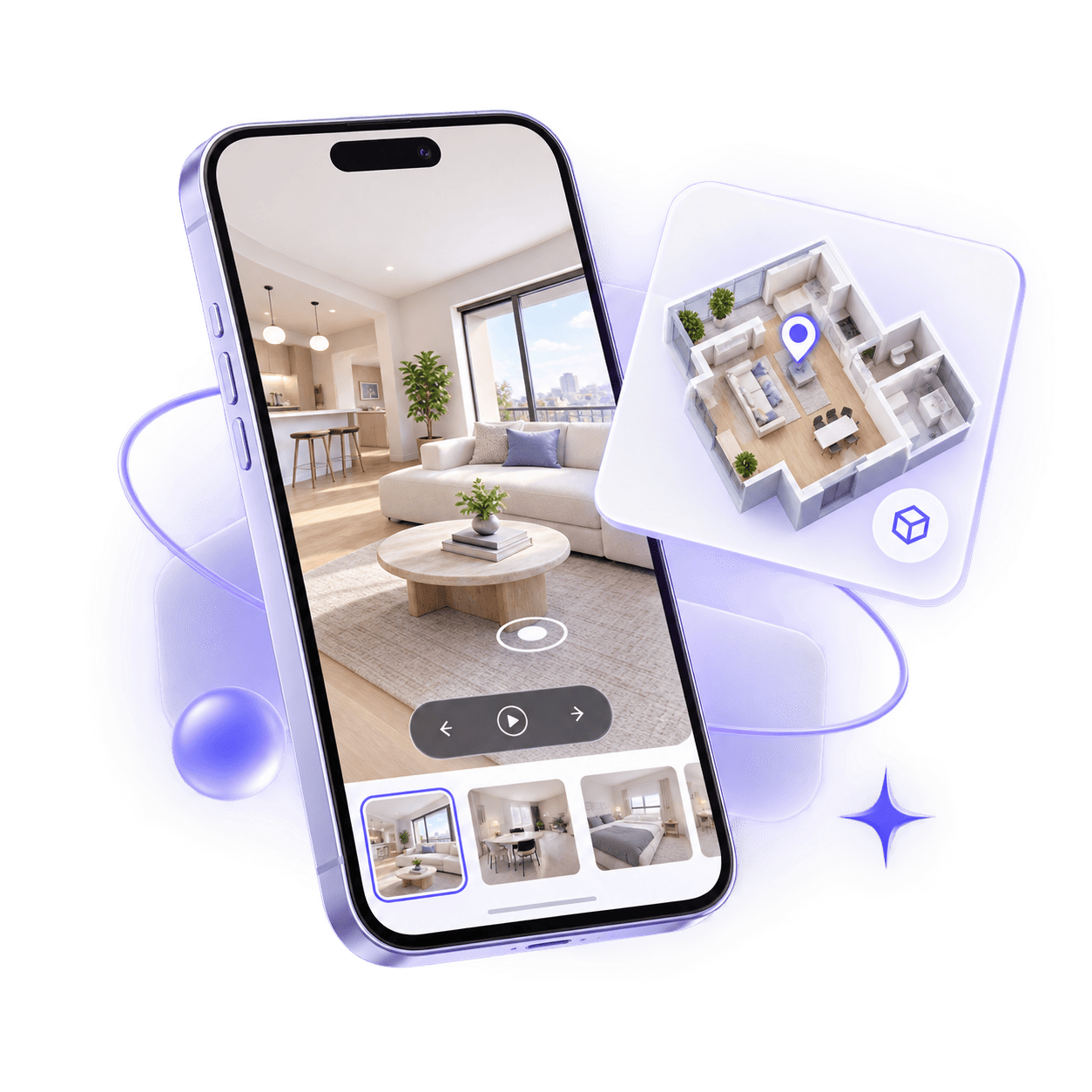
They should be able to move forward, return to a previous space, pause, look around, and choose what to view next without losing their place. The experience should support curiosity instead of forcing everyone through one fixed route.
This sense of control is especially important online. During an in-person tour, a leasing professional can respond to questions and redirect the visit. In a digital experience, the navigation itself has to provide that support.
The best interaction is not the one with the most features. It is the one that allows renters to explore naturally without feeling lost.
A sense of orientation
A collection of room views does not automatically communicate how a home works.
Renters also need to understand how the spaces connect.
Where is the kitchen in relation to the entrance? Does the primary bedroom feel separate from the living area? How does someone move from one room to another? Is the balcony connected to the living room or the bedroom?
These spatial relationships are difficult to communicate through a standard image gallery.
A digital tour can provide a stronger sense of orientation by connecting each view to the larger layout. Floor plan references, room labels, directional cues, and clear transitions help renters build a mental map as they explore.
This is particularly valuable when comparing residences with similar square footage but different layouts. The numbers may be close, while the way each home feels and functions can be very different.
A successful tour makes those differences easier to understand.
Context beyond the residence
Renters are rarely choosing a unit in isolation.
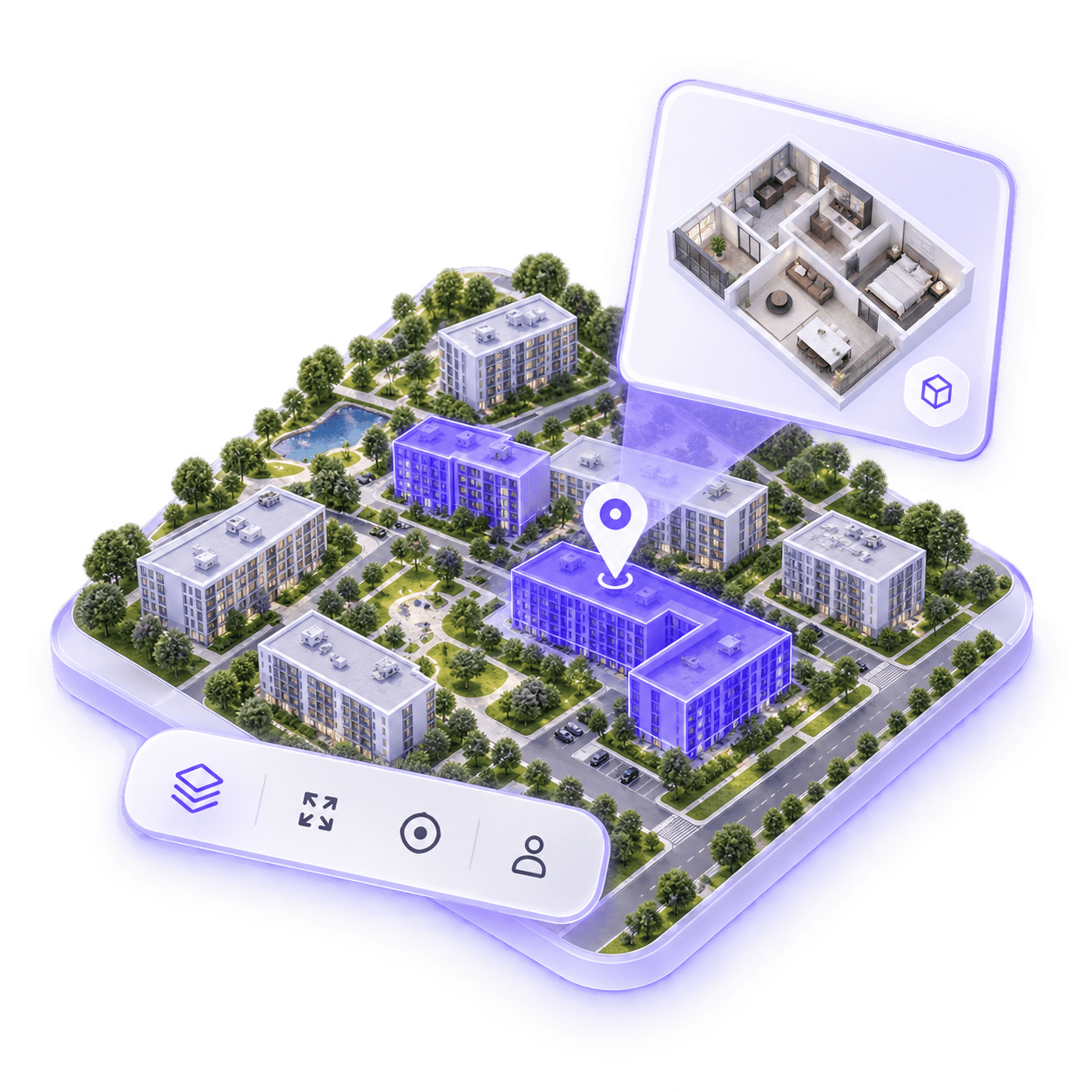
They are also considering the building, the amenities, the property, and the surrounding neighborhood. A residence may look right, but the final decision often depends on how it fits into that wider experience.
Which floor is it on? Where is it within the building? How close is it to the elevator, parking, pool, coworking area, or outdoor space? What views might it have? How does the property connect to the neighborhood?
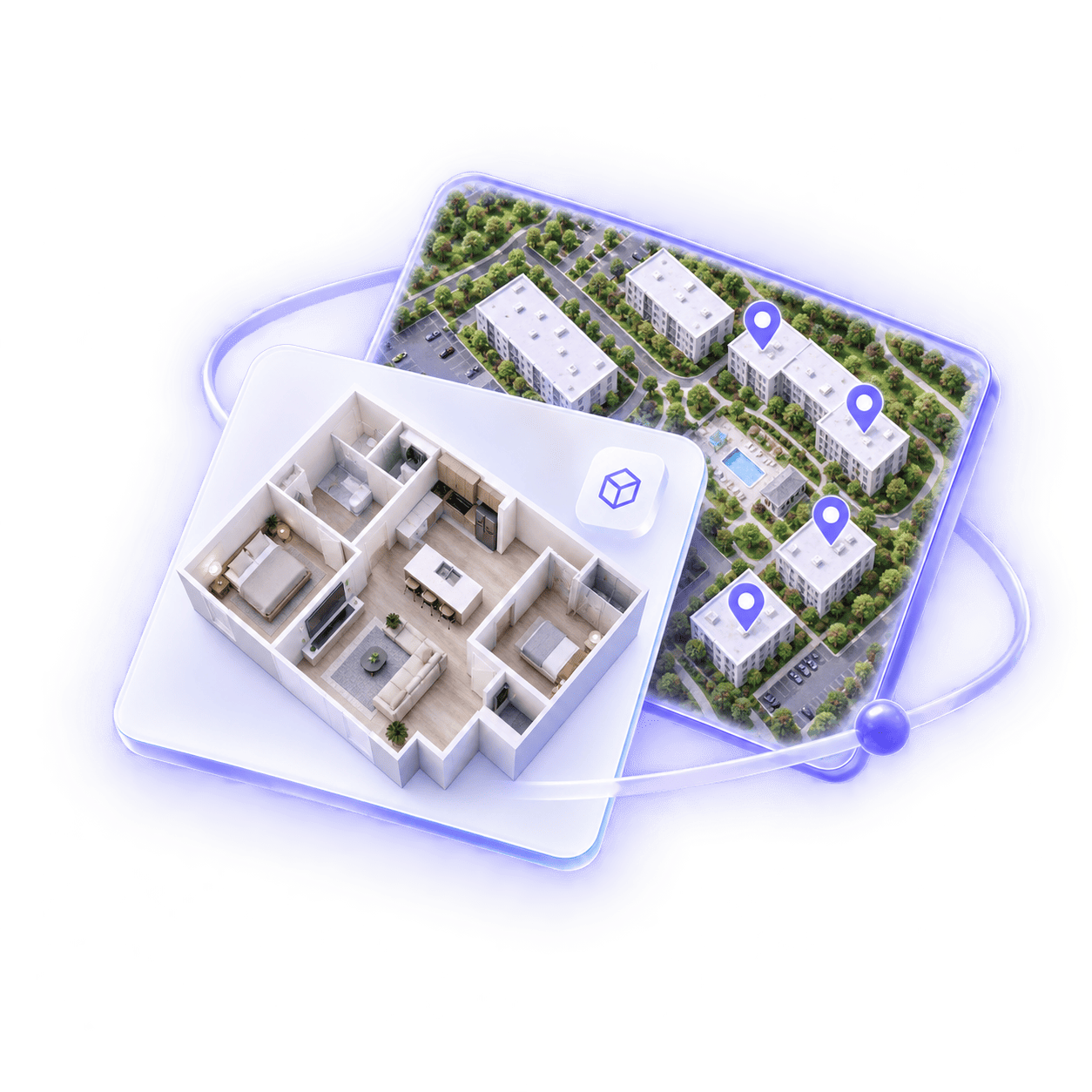
A standalone Photography Tour or Render Tour can present an individual space with clarity and detail. Within a connected leasing platform, that same tour can become part of a larger journey across the property.
Renters can move from a residence to its floor plan, from the floor plan to the building, and from the building to amenities or location context.
The tour still plays a focused role. It simply no longer has to carry the entire property story on its own.
Information at the right moment
A digital tour should answer questions without interrupting the experience.
If renters have to leave the tour to find basic information elsewhere, the journey becomes fragmented. They may open multiple pages, lose their place, or abandon the exploration entirely.
Useful details should appear close to the moment when they become relevant.
That might include:
- room or residence labels;
- floor plan and square footage;
- key features or finishes;
- availability or unit information;
- amenity details;
- a clear way to request more information.
The goal is not to fill every view with text. Too much information can compete with the space itself.
Instead, information should be layered. The tour provides the visual understanding first, while supporting details remain available when the renter wants them.
For every interactive element, ask:
Does this help the renter understand the property or take a meaningful next step?
If it does neither, it may be adding complexity rather than value.
A reliable experience on every screen
Many renters will first encounter a property on their phone.
They may open a tour from a social post, an email, a listing, or a quick search between other tasks. The experience needs to work within that reality.
Navigation should remain clear on a smaller screen. Controls should be easy to use by touch. Text should stay readable. Images should load efficiently without losing the level of detail needed to understand the space.
The mobile experience should not feel like a reduced desktop version with essential features removed. It should preserve the same core journey while adapting it to a different way of viewing and interacting.
Desktop still matters, particularly for renters who want to compare layouts or explore in greater detail. But the quality of the experience should not depend on which screen they happen to use first.
A reliable tour allows someone to begin on one device and continue exploring with the same sense of clarity on another.
A natural next step
Exploration should lead somewhere.
After spending time inside a tour, renters should not have to search for what to do next. The experience should provide a clear and relevant action without turning the tour into a sales interruption.
Depending on the property and stage of the leasing journey, that next step might be:
- viewing the floor plan;
- exploring available residences;
- comparing another layout;
- scheduling a visit;
- contacting the leasing team;
- returning to the broader property experience.
The right action should feel like a continuation of the renter’s journey, not a sudden change of subject.
This is one of the advantages of connecting tours with the rest of the leasing experience. The renter can move directly from understanding a space to exploring a real option.
What the leasing team can learn
A digital tour is also a source of insight.
The way renters explore can reveal which spaces attract attention, where they spend time, what they return to, and when they choose to take the next step.
These signals do not explain every decision on their own. But alongside leasing conversations and broader engagement data, they can help teams identify patterns.
A room that receives repeated attention may deserve stronger placement in the property story. A layout that renters leave quickly may need clearer context. A frequent transition from a tour to a particular floor plan may show where interest is becoming more specific.
The experience can then improve over time.
Navigation can be refined. Important information can be easier to find. Content can be organized around the questions renters actually ask rather than the assumptions made before launch.
The takeaway
Renters expect a digital property tour to be visually compelling. But they also expect it to be understandable, responsive, and useful.
They want the freedom to explore without becoming disoriented. They want to see how rooms connect, understand how the residence fits into the larger property, and find relevant information without leaving the experience.
Most importantly, they want to feel more certain than they did before opening the tour.
When a digital tour provides that clarity, it becomes more than a visual asset. It becomes a meaningful part of the leasing journey—helping renters move from seeing a space to imagining themselves within it.